June 16, 2026 - 548 views
A neonatal service in North Wales has achieved top-level international accreditation for its care of newborn babies and families, marking a major milestone in its approach to supporting the earliest stages of life.
The Neonatal Unit at Betsi Cadwaladr University Health Board (BCUHB) has been awarded full Baby Friendly Initiative (BFI) status – a globally recognised programme led by UNICEF and the World Health Organisation, designed to improve standards of maternity and neonatal care.
Originally launched in 1994 to promote best practice in maternity services, the initiative has expanded over the years to include neonatal care, with a strong emphasis on family-centred support, breastfeeding, and bonding between parents and their babies.
UNICEF UK Baby Friendly Initiative Deputy Programme Director Anne Woods said the achievement reflects years of sustained work across the health board.
She said: “We are delighted that BCUHB has achieved full Baby Friendly status. Our work to support breastfeeding is based on extensive and resounding evidence that breastfeeding saves lives, improves health and cuts costs in every country.”
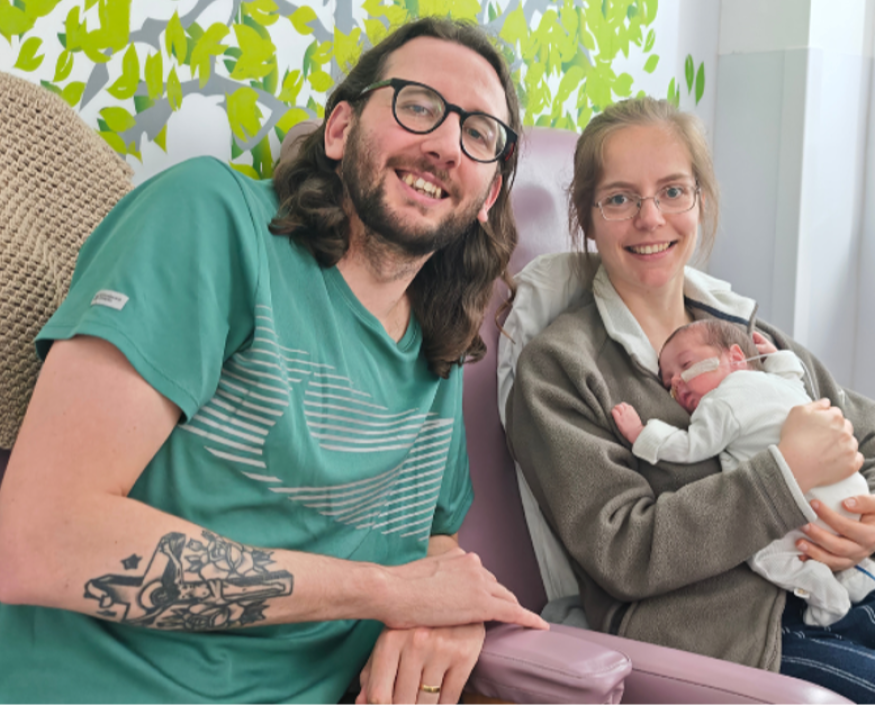
For families like Ben Fleming and Amber Boekhorst, from Holywell, the accreditation reflects the care they experienced first-hand during an intensely difficult start to parenthood.
Their son Lukas was born unexpectedly at just 27 weeks and three days, weighing only 1.16kg. After weeks of specialist neonatal care at Glan Clwyd Hospital, he left hospital a healthy 3.2kg at 37 weeks.
Ben described the neonatal staff as an extension of their own family.
“The staff have been incredible, spending 12 hours a day getting to know our baby. They are almost second parents – like a second family,” he said.
Amber, who had been training as a GP student doctor on the Wirral when she became unwell and required emergency surgery, said the support they received helped turn a frightening experience into one defined by reassurance and learning.
“As soon as we got on the unit, they asked if I wanted to do skin to skin, which was really good,” she said. “That’s what they’ve really promoted – telling us that’s the best thing you can do for your baby.
“I think it’s definitely contributed to his growth and recovery.”
The couple also highlighted the importance of being involved in their baby’s care, including ward rounds and discussions with the wider neonatal team.
“The nurses have been invaluable,” Amber said. “There is space to ask questions, and even after ward rounds we can go back and get answers. It removes a lot of the fear and mystery.”
Ben added that Lukas benefitted from a full multidisciplinary team approach.
“He’s got a dietitian looking at growth, a physiotherapist for positioning, and even a psychologist on the ward. It gives you confidence knowing there’s a whole team behind your baby.”
The Baby Friendly Initiative accreditation was awarded following a multi-stage assessment process, including a review of policies in 2020, staff interviews in 2024, and final on-site inspections in 2025 across hospitals within the health board.
Assessors looked at how well services supported bonding between parents and babies, encouraged breastmilk feeding where possible, and treated parents as partners in care.
Julie Grocott, Senior Staff Nurse and Neonatal Infant Feeding Lead, said the award reflects a long-term commitment to family-centred care.
“This award is a reflection of our ongoing commitment to value the part parents play in their baby’s recovery,” she said. “We embrace them as team members and support them to build strong family relationships.”
She added that breastfeeding offers significant health benefits for both babies and mothers, but stressed that all families are supported regardless of feeding choice.
As Lukas prepares to go home, his parents say they leave the unit with confidence, supported by both staff expertise and practical guidance gained during their stay.
Amber said the gradual transition towards more hands-on parenting helped them feel ready for life outside hospital.
“We’ve really felt like his parents,” she said. “We’re the ones fully in charge now.”
The couple say there is only one small regret as they prepare for discharge: missing out on the unit’s music therapy sessions.