October 14, 2026 - 253 views
The RNLI is to introduce new lifeboats at stations across North Wales as part of a major modernisation programme, with Rhyl set to lose its all-weather lifeboat after 175 years of providing that service.
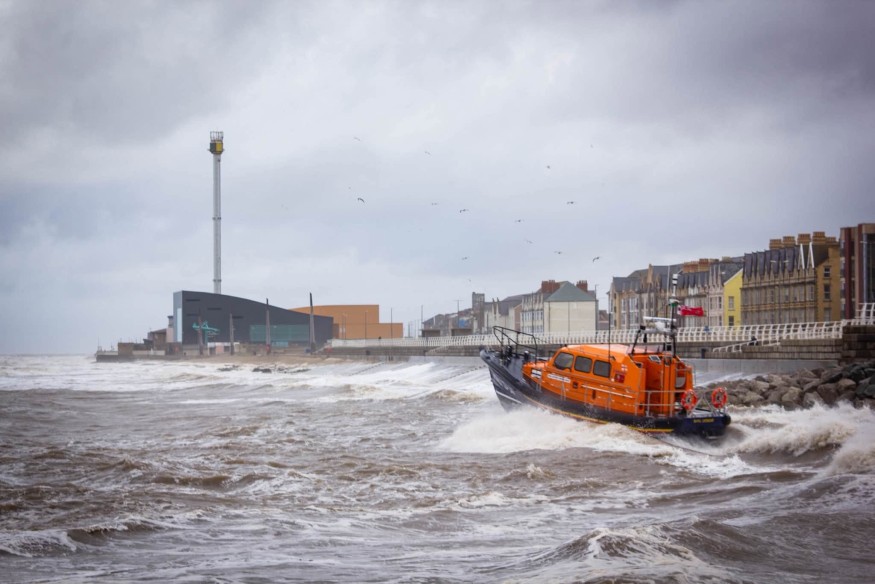
Under the charity’s long-term fleet strategy, Rhyl will receive a new Atlantic 85 Mk4 inshore lifeboat in 2028, replacing its Shannon class all-weather vessel. Holyhead will also see its Trent class lifeboat replaced by a new Coastal Lifeboat, while Fishguard will receive the same new class in 2028.
The changes form part of a wider programme affecting 24 of the RNLI’s 238 lifeboat stations across the UK and Ireland between 2028 and 2030. Angle, in Pembrokeshire, will see its Tamar class lifeboat replaced by a Coastal Lifeboat in 2029.
The RNLI says the changes reflect the changing nature of rescues at sea, with research showing that most of its lifeboat call-outs now take place relatively close to shore.
Data gathered between 2017 and 2024 shows that 98% of lifeboat responses were within 10 nautical miles of the coast. Just 1.8% were between 10 and 25 nautical miles offshore, while 0.2% took place more than 25 nautical miles from land.
The charity responded to 9,058 operational services in 2025, more than three-and-a-half times the number expected of the service 50 years ago.
The RNLI says the fleet changes will ensure lifeboats are better matched to the demands placed on individual stations, while maintaining effective rescue coverage around the coast.
The announcement marks a significant change for Rhyl, where the arrival of the Atlantic 85 Mk4 will bring an end to the station’s current all-weather lifeboat provision.
The Shannon class lifeboat Anthony Kenneth Heard arrived at Rhyl in 2019. Its replacement will bring updated technology and operational capabilities, but the change also marks the end of a long chapter in the station’s history.
In a statement, Rhyl RNLI said the crew were “saddened and disappointed” to be saying farewell to their all-weather lifeboat in 2028.
The station said the departure would mark the end of a 175-year history of all-weather lifeboat service at Rhyl, adding that the crew would be “heavy hearted” as the chapter came to a close.
However, the crew also welcomed the opportunities presented by the new Atlantic 85 Mk4, saying volunteers would continue working to maintain the station’s lifesaving service to a high standard.
They also thanked the local community for its ongoing support as the station adapts to the changing pattern of rescues.
The move represents a substantial change in the type of lifeboat based at Rhyl, rather than a like-for-like replacement. The Atlantic 85 Mk4 is an inshore lifeboat designed for a different operational role from the Shannon class all-weather vessel.
The RNLI says the upgraded Atlantic 85 Mk4 will improve operational capability, introduce digital communications and support a more sustainable and cost-effective approach to maintaining its fleet. Volunteer crew members have been involved in its design and modifications.
Holyhead and Fishguard will both move from their existing Trent class all-weather lifeboats to the RNLI’s new Coastal Lifeboat in 2028.
The Trent class first entered service in 1994 and is now being gradually withdrawn as part of the fleet modernisation programme. The new Coastal Lifeboat is intended to bridge the capability gap between an inshore lifeboat and the larger Shannon class.
It will have a watertight wheelhouse and be self-righting, allowing it to recover to an upright position if capsized.
The RNLI says the new vessel will offer greater capability than an inshore lifeboat in areas including operation in challenging weather, endurance, towing, casualty care and crew comfort.
It will be optimised for operations within 10 nautical miles of the coast, while remaining capable of operating up to 25 nautical miles offshore.
Angle Lifeboat Station in Pembrokeshire will also receive a Coastal Lifeboat, replacing its Tamar class vessel in 2029.
The RNLI says its strategy is based on evidence about where and how its lifeboats are being used, alongside advances in search and rescue technology and an assessment of the needs of individual stations.
Over the past 50 years, the use of the sea around the UK and Ireland has changed significantly. The charity says fewer lifeboat services now involve boats and other vessels, with crews increasingly responding to people using the coast for recreation.
Open-water swimming, kayaking and paddleboarding are among the activities contributing to the changing pattern of incidents.
The strategy takes account of the capabilities of neighbouring lifeboat stations and other search and rescue services, with the aim of maintaining effective coverage around the coast.
The RNLI says its integrated lifesaving operation extends from water-safety education and lifeguard services on shore to lifeboat operations as far as 75 nautical miles offshore.
Chief executive Peter Sparkes said the changes were intended to ensure the charity had the right lifeboats in the right places, while keeping volunteer crews safe.
He said the RNLI needed to adapt to changing rescue demands and invest donations where they would have the greatest impact.
The second phase of the fleet strategy will be delivered over the next 15 years, with the latest changes forming part of a longer-term effort to ensure the service meets the needs of coastal communities.
For Rhyl, the arrival of the Atlantic 85 Mk4 will bring a new era of lifesaving, but the departure of its Shannon class lifeboat will also mark the end of a 175-year tradition of all-weather lifeboat provision at the station.