August 27, 2026 - 282 views
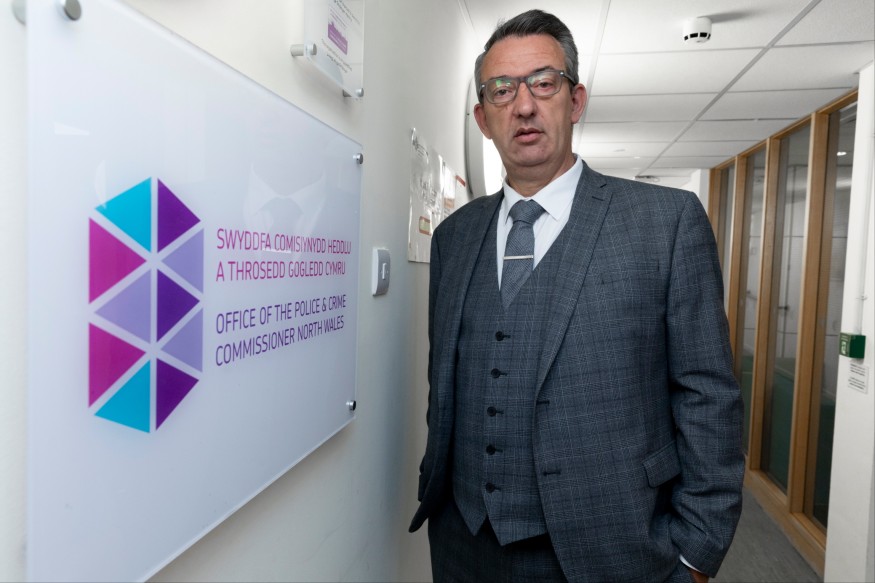
North Wales must not lose out if policing and criminal justice powers are devolved from Westminster to Wales, the region's Police and Crime Commissioner has warned.
Andy Dunbobbin has spoken out following renewed discussions about the future of policing in Wales, after Prime Minister Andy Burnham said he was “open to the conversation” about transferring control of policing to the Welsh Government and Senedd.
Mr Burnham made the comments during his first official visit to Wales as Prime Minister, when he also announced plans to bring together the leaders of Wales, Scotland and Northern Ireland for an economic summit in October.
He has been promoting what he describes as “deeper devolution”, including potentially giving Wales and Scotland powers similar to those being transferred to elected mayors and regional leaders in England.
But while the North Wales PCC says he supports the principle of devolving policing and criminal justice, he is stressing that any new arrangements must work for the whole of Wales – and particularly protect North Wales from losing resources, influence or local accountability.
“My priority and guiding aim is that North Wales is not disadvantaged,” Mr Dunbobbin said.
He believes there could be advantages to bringing policing closer to services that are already devolved to Wales, including health, social care and local government.
He argues that better cooperation between those services could help tackle the causes of crime, intervene earlier and provide better support to people at risk of becoming involved in the criminal justice system.
However, he says the detail of any new system will be crucial.
“The devil is always in the details,” he told the Welsh Affairs Select Committee in Westminster, highlighting the importance of governance and local accountability.
One of Mr Dunbobbin's key concerns is that transferring powers from London should not simply result in decision-making becoming concentrated in Cardiff.
He says North Wales needs a fair share of funding and representation, particularly to support frontline neighbourhood policing.
“Devolving powers from London cannot result in resources and decision-making being drawn disproportionately towards South Wales,” he said.
“North Wales must receive its fair share of funding to support our frontline neighbourhood policing teams.”
That issue is particularly significant for North Wales, which has a distinct geography and a population spread across rural communities, coastal towns and more remote areas.
The region also has a very different relationship with the English border from much of the rest of Wales, with people regularly travelling between North Wales and areas including Cheshire, Merseyside, Greater Manchester and Lancashire for work, shopping, education and services.
Mr Dunbobbin says that cross-border relationship is also critical when it comes to policing.
The PCC warned that any future restructuring of policing must protect the established operational links between North Wales Police and neighbouring forces in England.
North Wales Police works closely with forces including Cheshire, Merseyside, Greater Manchester and Lancashire, particularly in tackling serious and organised crime.
“Criminality follows the economy. It moves east to west and west to east,” Mr Dunbobbin said.
He argues that the ability of officers and forces on both sides of the border to share intelligence and work together seamlessly is essential.
That could become an important consideration if policing governance changes, because organised criminal networks do not operate according to the political boundaries between England and Wales.
The intervention comes as the UK Government begins a wider conversation about how power should be distributed across the UK.
Mr Burnham's proposed October summit is intended to bring together the First Ministers of Wales and Scotland and the First and deputy First Ministers of Northern Ireland to discuss economic growth and cooperation.
The Prime Minister has also raised the possibility of giving Wales greater powers, including over policing.
Policing is currently not devolved to Wales. North Wales Police, Dyfed-Powys Police, South Wales Police and Gwent Police operate within the existing UK-wide legal and justice framework, with policing overseen locally by Police and Crime Commissioners.
The Welsh Government has previously argued that policing and justice should form part of a wider devolution settlement for Wales.
For Mr Dunbobbin, however, the question is not simply whether powers should be transferred from Westminster.
It is whether a new system would actually improve policing for people living in North Wales.
“I am, in principle, supportive of the devolution of policing and criminal justice to Wales,” he said.
“Joining up policing with devolved health, social care and local government services makes sense when it comes to early intervention and crime prevention.”
But he added that any future model must “protect local accountability” and ensure North Wales receives the resources and representation it needs.
The debate is therefore likely to extend beyond the question of who controls policing.
For North Wales, the bigger questions may be where decisions are made, how money is distributed, how local communities retain their voice – and whether cross-border policing can continue to operate effectively.
Mr Dunbobbin says he will support a model that delivers better outcomes for communities, but insists that North Wales must not become an afterthought in any new settlement.
“My focus is making sure communities across North Wales continue to benefit from an efficient and effective police service,” he said.
“I will support any model that delivers that outcome, protects local accountability and ensures North Wales gets the resources and representation it deserves.”